Surgr
An AI fitness app live in production with real subscriptions. Training adapts to every reported set, not to a generic plan.
Visit product
- Type
- AI Product
- Status
- Live
How it works
- 01Set reported
- 02Effort recalibrates load
- 03AI adjusts the plan
- 04Plateau detected
- 05The app explains why
Inside the app
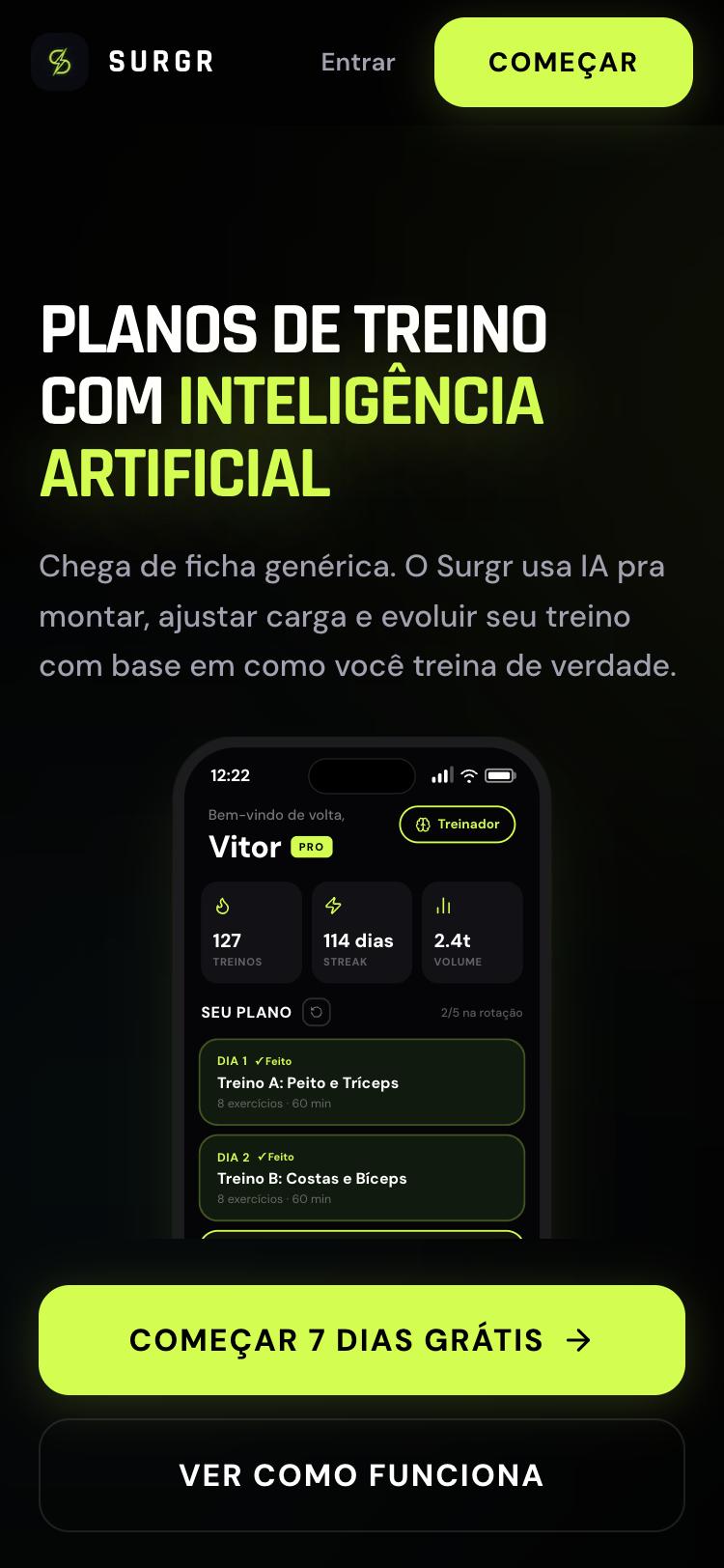
Landing page 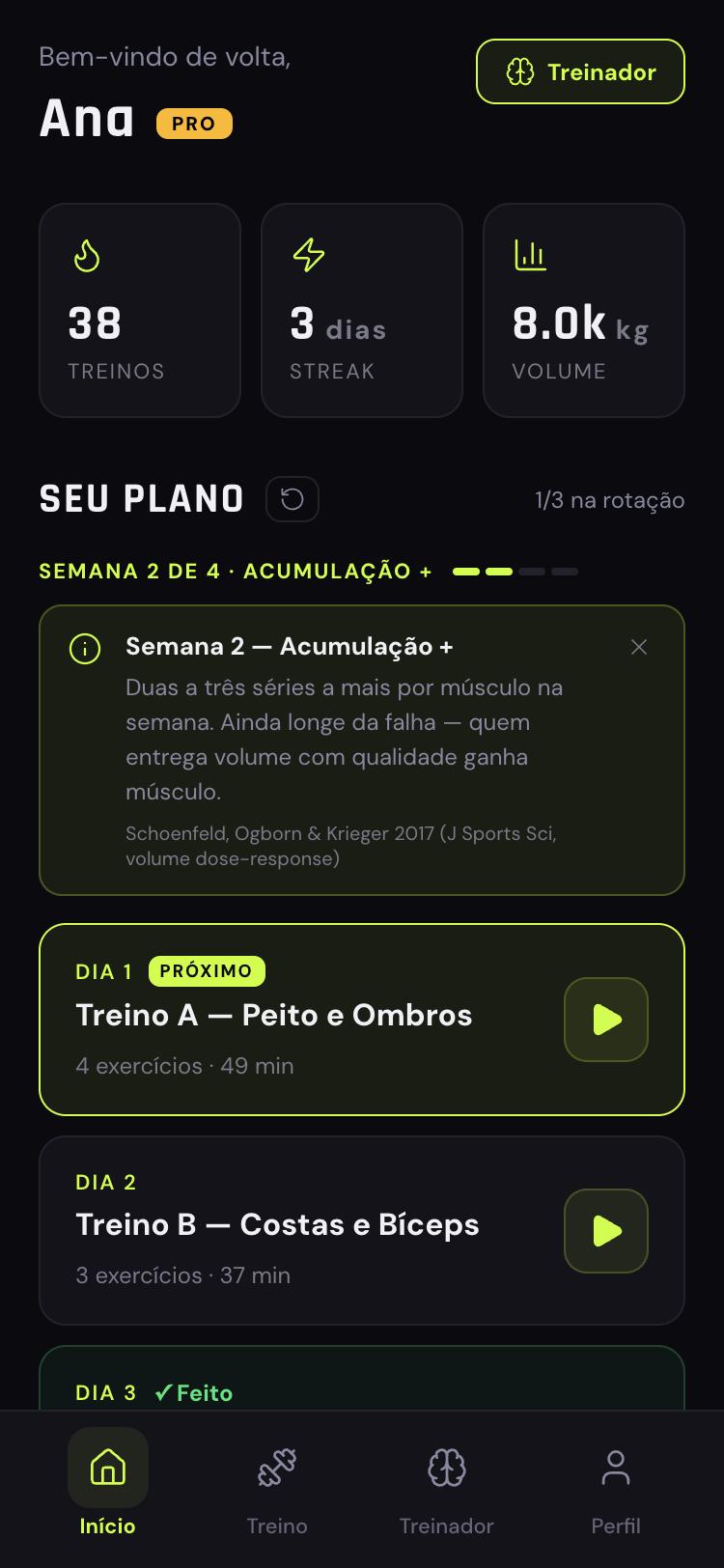
Home 
Daily check-in 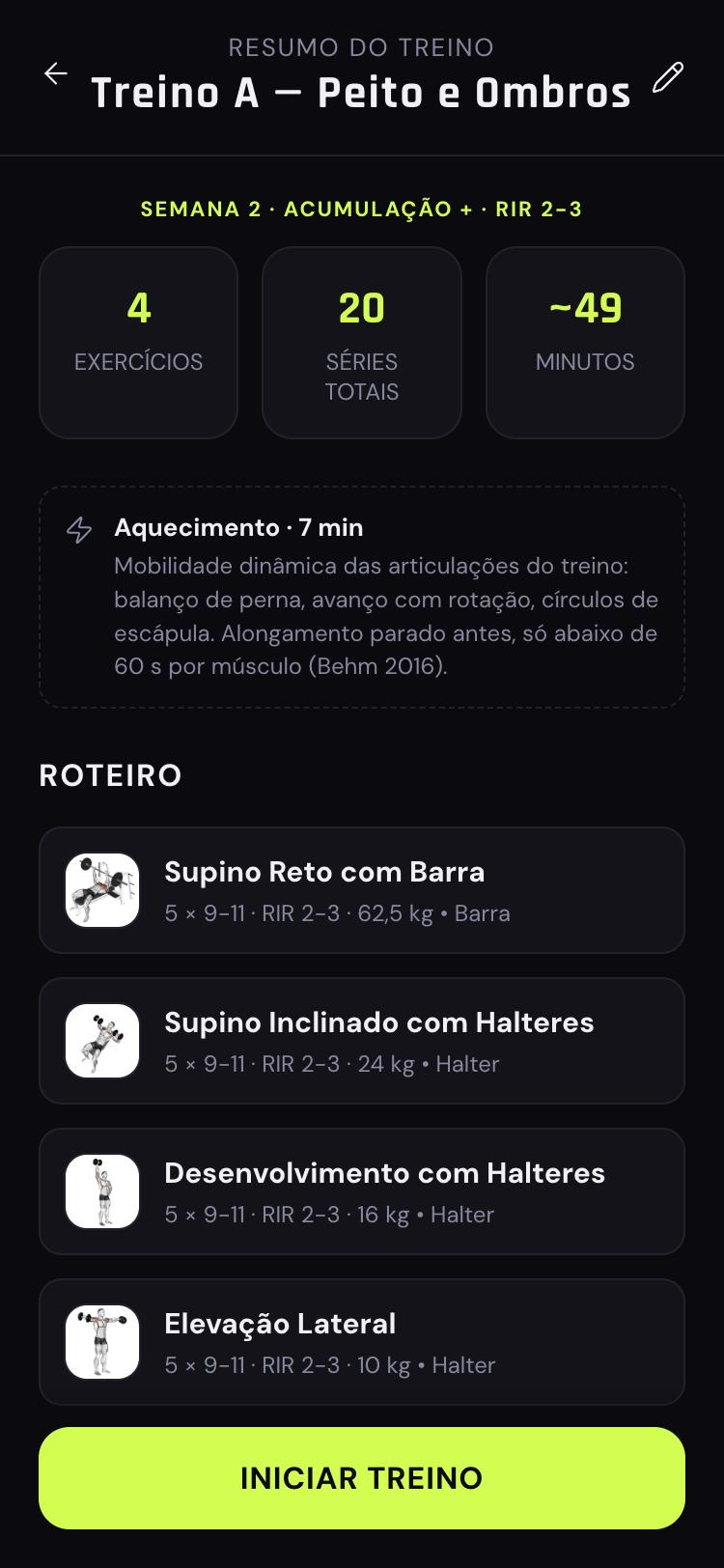
Workout summary 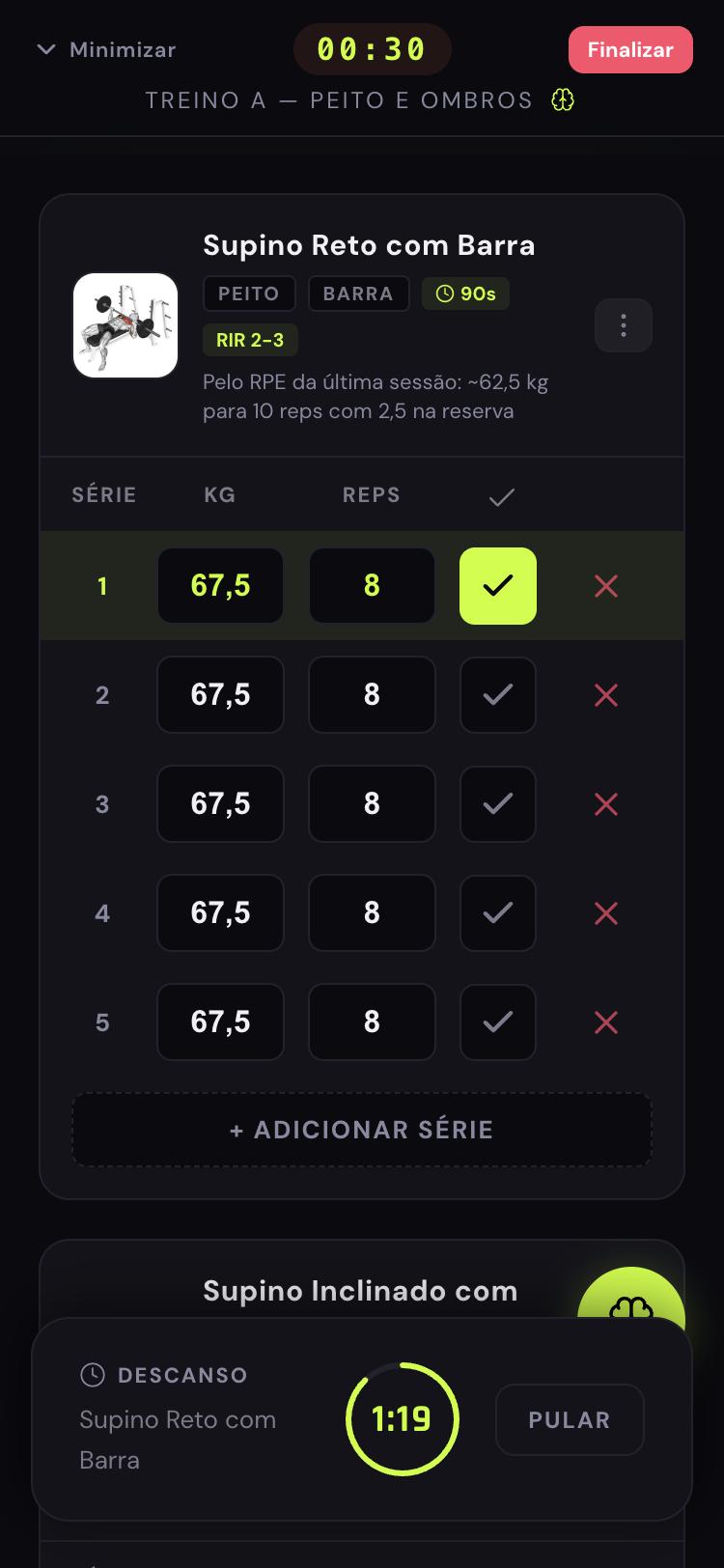
Active workout 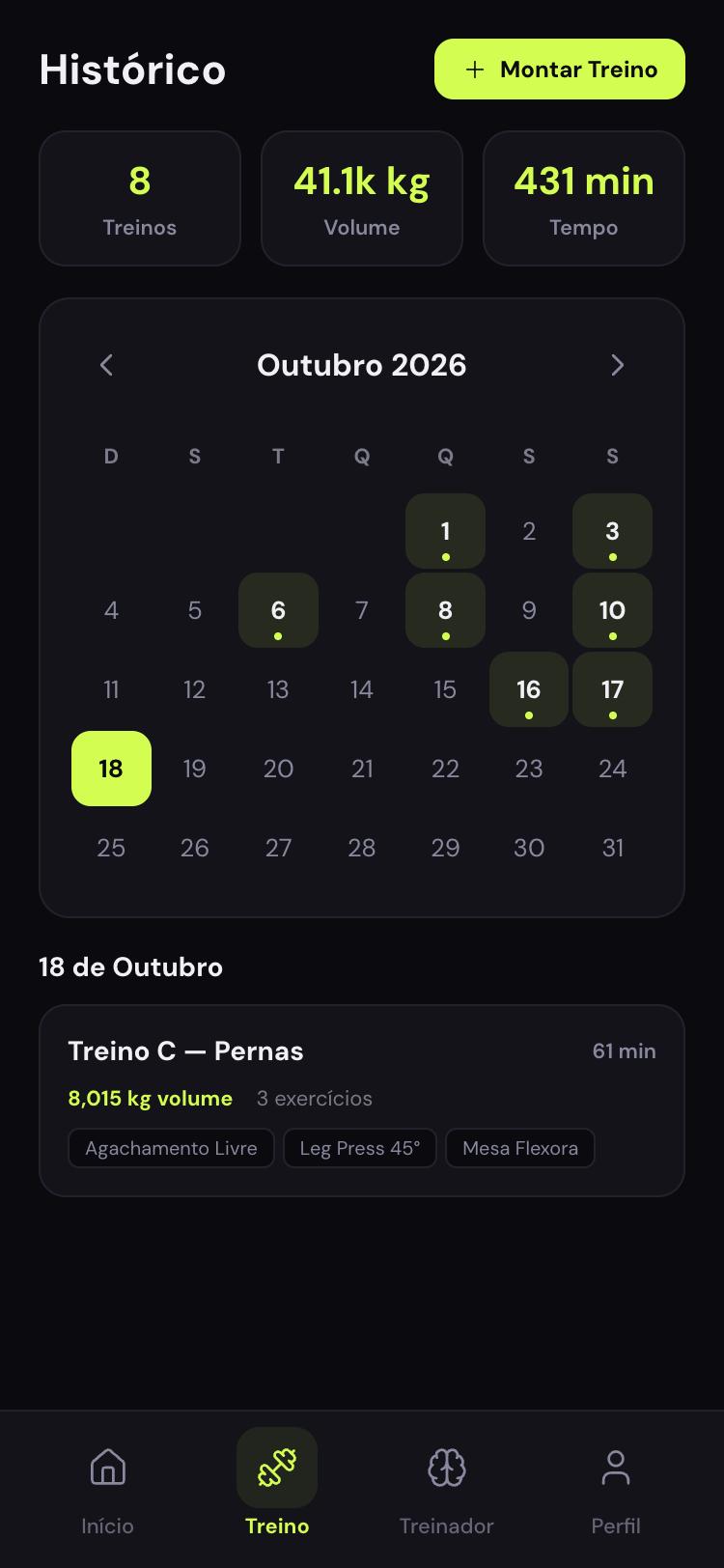
History 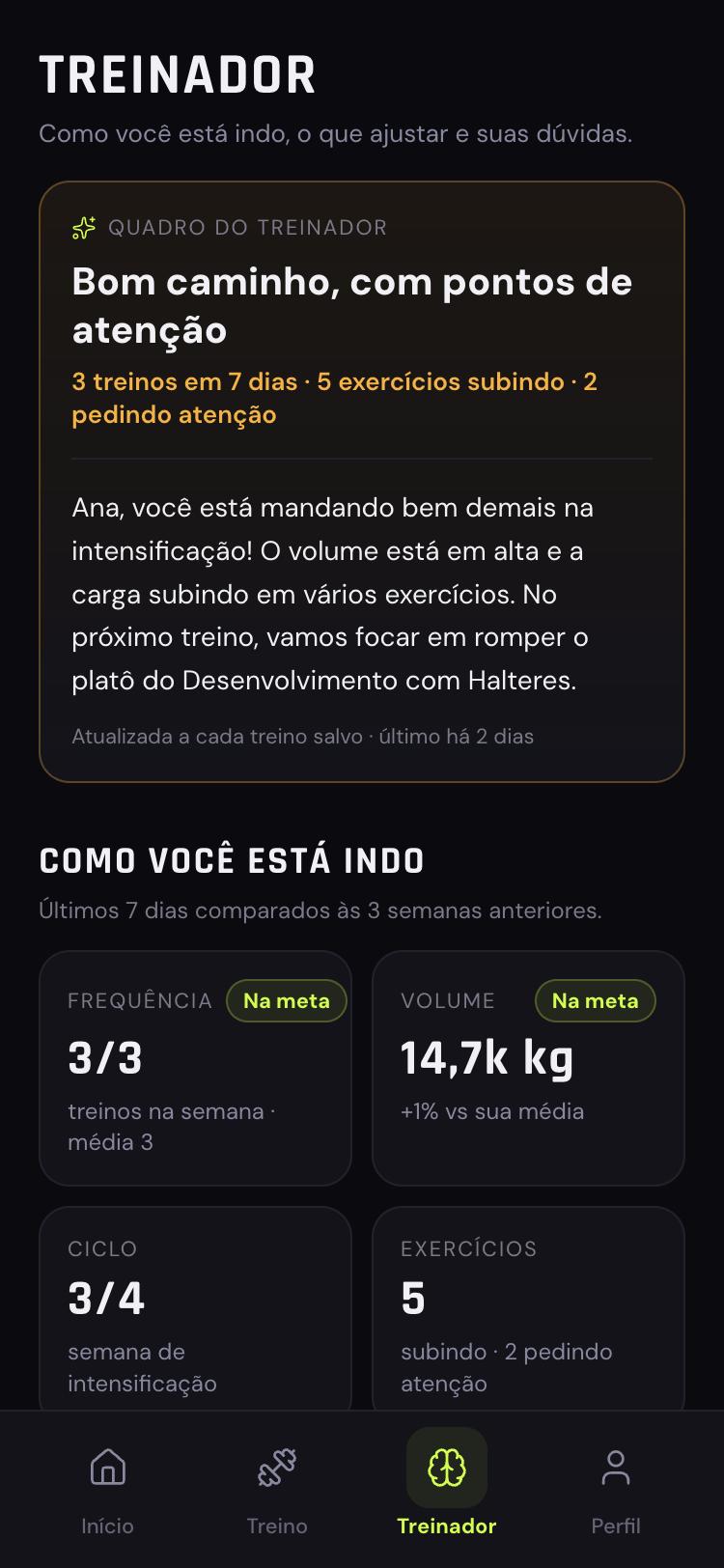
Coach board 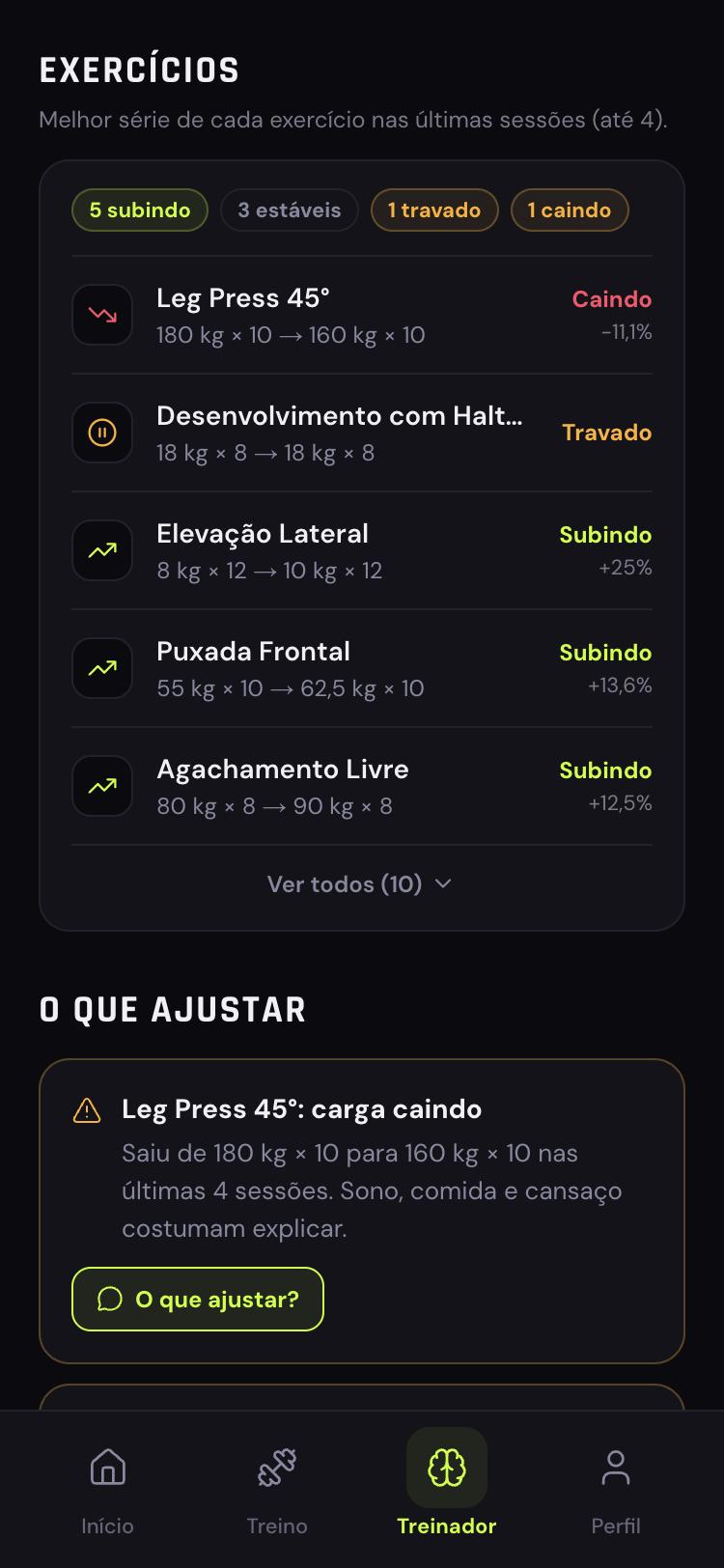
Progress by exercise 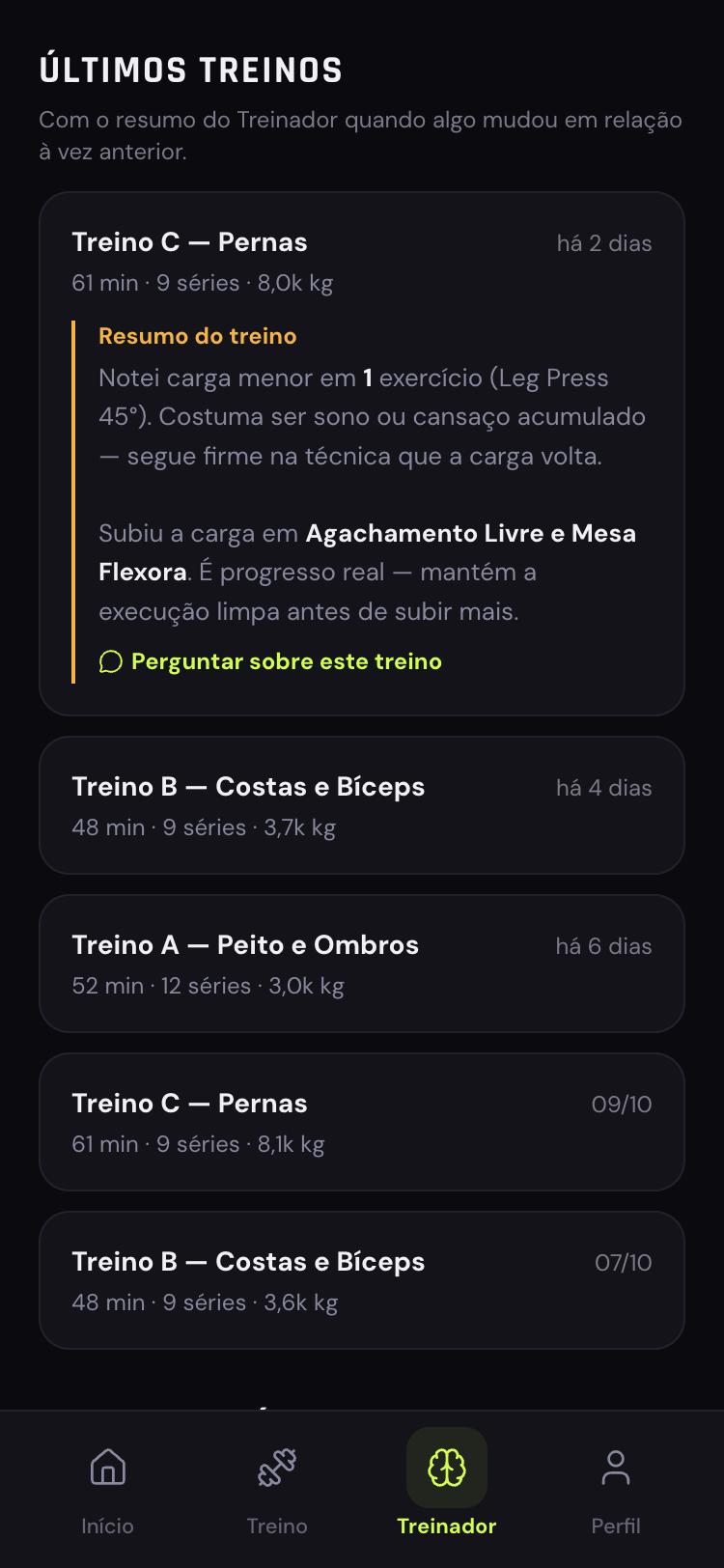
Recent workouts 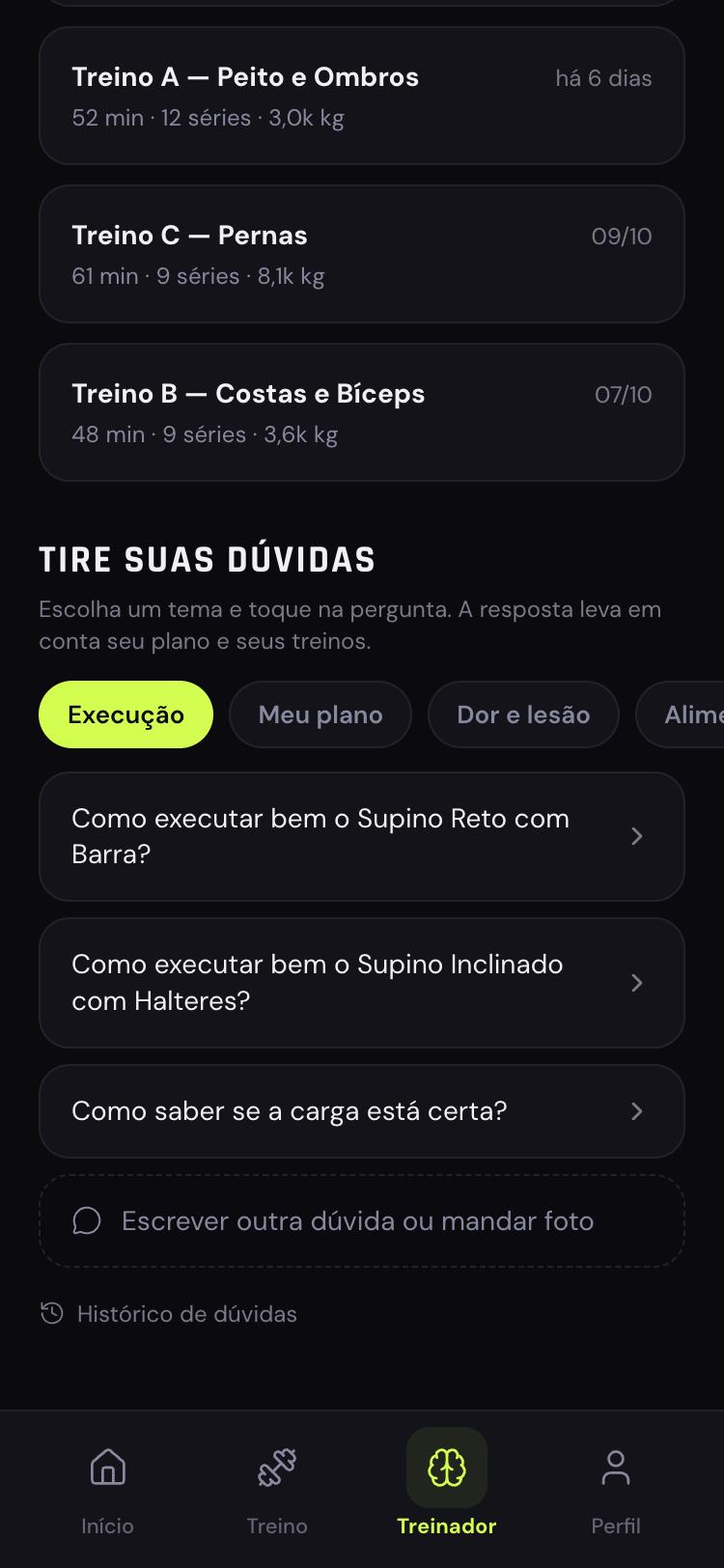
Ask the coach 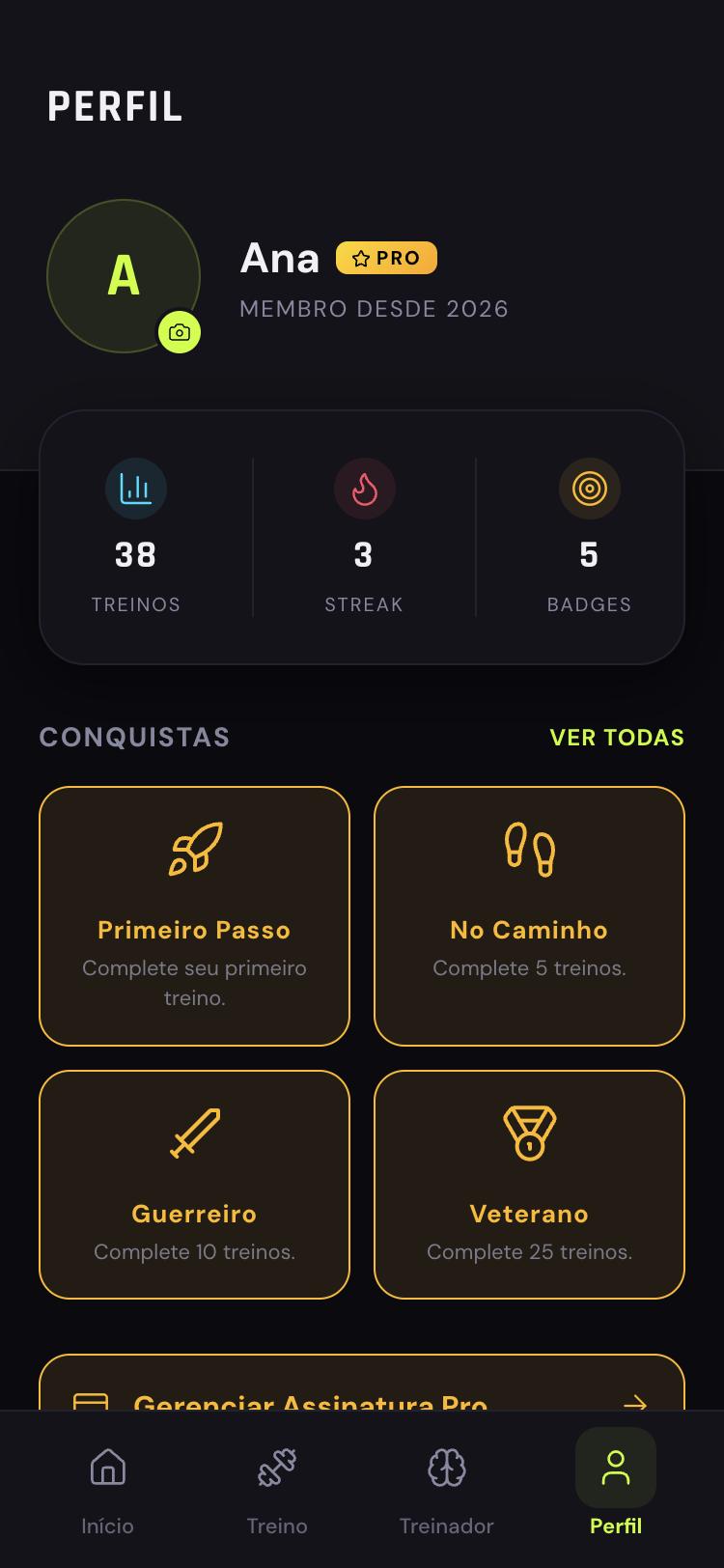
Profile
The context
Most training apps hand you a generic plan and disappear. Surgr was born from a question: what if the app behaved like a real coach, one that watches every set, adjusts the load, and notices when you plateau? I built the entire product alone, and it is live, with subscribers.
The real problem
Health apps treat data as trophies: charts that impress and change nothing. Surgr bets on the opposite. A data point only matters if it changes the next training decision, and that demands an AI with a grounded opinion and an interface that explains every adjustment.
The critical decisions
The coach follows the set, not just the plan
After every set, the reported effort recalibrates load and intensity. The plan stops being a glorified PDF and becomes an ongoing conversation between real effort and the next decision.
AI grounded in methodology, not in a loose prompt
Gemini generates plans inside an evidence-based operational guide, with strength, hypertrophy, and deload phases. Model creativity where it helps, science where it is non-negotiable.
PWA instead of a native app
Building alone, every hour spent on store builds is an hour not spent on the product. Web Push and a Service Worker deliver the installable app experience; the store can wait for traction.
Zero emojis in the product
A documented policy enforced at pre-commit: every visual signifier comes from the design system, never from the operating system font. Visual consistency is an engineering decision too.
My role
- Designed and built the entire product: research, design system, frontend, backend, database, and deploy.
- Defined the evidence-based training methodology guide that grounds every AI-generated plan.
- Implemented authentication, Stripe subscriptions, push notifications, and LGPD compliance.
The AI layer
- Plans generated inside an evidence-based training guide, never from an open prompt.
- Plateau detection: when progress stalls, the AI varies exercises or volume and shows why.
- A chat coach that knows the user’s history and answers like a trainer, not like a generic search box.
Design system
Surgr has its own public, documented design system: a dark palette with lime as the accent and gold reserved for Pro, Rajdhani and DM Sans typography, an 8px grid, six component archetypes, and UI kits for the app, the landing page, and the transactional email.
Explore the design systemsurgr.com.br/dev/design-systemOutcomes
Live in production at surgr.com.br, with a Pro subscription and a Stripe-powered trial.
A full product cycle executed by one person: from the first design token to the production database.
A base ready to scale: installable PWA, push notifications, and LGPD compliance from day one.
What I’d do differently
Building alone showed me where design actually lives: in the decisions no screen displays. What the AI may decide, what it must ask, and what it should never promise.